Lens Selector
Not sure which lens you need? Here are some suggestions...

|
Portraits: When shooting individuals in a studio, primes (fixed focal length lenses), such as 50mm , 85mm, 105mm, are often used, but if you have more space to work with, the 135mm and 200mm lenses give outstanding results. A mid-range 24-70mm zoom is great when working with groups because you can easily frame the photo depending on the size of the group. When shooting individuals outdoors, a longer zoom with a wide aperture is great, such as a 70-200mm f/2.8. If you're shooting head shots, a 200mm prime is great.
|
|
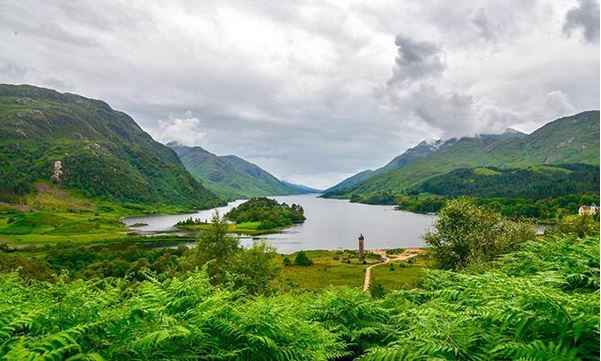
Vacations: Most people rent a wide angle zoom because they are so versatile. They can be used for almost anything including landscape, architecture, wildlife, groups, etc. Both Nikon and Canon offer great lightweight 18-200mm super-zooms with image stabilization, but these only work with DX camera bodies. A great full frame, mid-range choice for Canon would be a 24-105 f/4, and for Nikon the 24-120mm f/4. If you need even more range, try a telephoto zoom, or a super telephoto zoom like the Canon 100-400mm, Nikon 80-400mm, or the newer Sigma 150-600mm lenses, which work on both FX and DX bodies.
|

|
Sports - Outdoors: To photograph sports, you'll get the best results with a lens that focuses fast, has a wide aperture, and some range. Both Canon and Nikon make 70-200mm f/2.8 lenses that are great for smaller venues such as high-school stadiums. The wide aperture lets you use a fast shutter speed to stop the action, plus the background blur will isolate the subject. On bright days, the Canon 100-400mm II IS and the Nikon 80-400mm are good choices. Image stabilization is highly recommended. Professional choices are the Canon 200mm f/2 and the Sigma 150-600mm Contemporary or Sport. Just be sure to rent a tripod with the latter two, they are heavy.
|

|
Sports - Indoors: Most gyms present a very challenging situation; the subject is moving fast and the light is fairly dim. You will get the best results using wide aperture prime lenses because they let in a lot more light than zooms. Plan on setting the ISO to 1000 or higher, aperture at f/1.8 or f/2.0, and using two lenses. Depending on the size of the facility and how close you can get to the action, arrive armed with 2 of the following prime lenses: 35mm, 50mm, or a 85mm. The Canon 135mm has been regarded as Canons best 'L series" lens, its sharp and fast, and offers an f/2 aperture. Nikon also makes a 135 f/2. The 200mm f/2 is a on the heavier side, and you'll want to use a tripod with it, but some consider it the ultimate indoor sport lens! The newer camera bodies offer impressive photos at higher ISO settings. The 70-200mm f/2.8 lenses will work well with these.
|
|
Stage Performance: You definitely want a zoom so you can frame the shots. You usually can't move about while the performance is going on so you need the lens to do the work. There is usually enough light on stage to use an f/2.8 zoom as long as you have the ISO set to a fairly high setting. Image stabilization is very useful because the shutter speeds may be a bit on the slow side. Once again, a 70-200mm lens and the 200mm f/2 are at the top of the list.
|

|
Capturing the Moment: Whether your at a celebration, an outdoor market, or any place with a lot of activity or atmosphere, take some shots with a wide angle prime, or a wide angle zoom. These lenses excel in producing photographs that capture the context of the event because you can see so much activity in the image. Try the Canon 10-22mm (DX), the Nikon 16-80 (DX), or the Nikon 14-24mm. Both Nikon and Canon make excellent 17-55mm lenses.The Sigma 24mm, 35mm and 50mm are also all good choices to take along. The 24mm will give you a broader looking image, while the 50mm will be more neutral.
|

|
Available Light: There are a few prime lenses with huge apertures that are great for shooting with no flash. These images capture the scene just like you see it because no flashes are used that change the light. Give this a try with the 50mm f1.2 and the 85mm f/1.2. These lenses are also useful in very large rooms where the flash won't reach the subject. Just be careful of the very narrow depth of field when the aperture is wide open. Other lenses with a big aperture include the Nikon 105mm f/1.4, and the line of Sigma Art Prime Lenses.
|
|
Landscapes: Wide angle lenses that are sharp corner to corner and have great contrast produce stunning landscape photos. If you have a cropped-frame camera (DX), try the Canon 10-22mm or the Nikon 10-24mm. Full-frame users will get great results with the Canon 16-35mm EF f/2.8L III or the Nikon 16-35mm AF-S f/4. Great landscape primes are the 14mm, 24mm, and 35mm lenses. People are usually looking for "as wide as possible" for landsacpe photos. This setup is often a winner: choose a great background, include something interesting in the foreground, and hold the camera low to the ground.
|
Have a specific question about a lens? Any of the staff at LensGiant is more than happy to help! Give us a call at 248 974 4108.
|